Your Apple Health history, in a file on your Mac
Pulsebridge keeps your Apple Health history in one SQLite database on your Mac: records, workouts, sleep and Activity rings, as far back as Health goes. A free iPhone app sends new data over your own network. There's no account and no cloud.
Health Auto Export works while its iPhone app is open. Pulsebridge works from your Mac.
Both have a Mac app, dashboards and an MCP server. Here's the rest, row by row.
- HAE pricing
- GitHub
- healthyapps.dev
- Sync to Mac docs
- Automations docs
- MCP announcement
- App Store listing
- Supported data
Health Auto Export details come from its own documentation, App Store listing and GitHub, checked on 3 November 2026. US prices. If something here is out of date, tell us and we'll fix it.
Pages built for how you train
Every page charts your whole history from the database on your Mac.
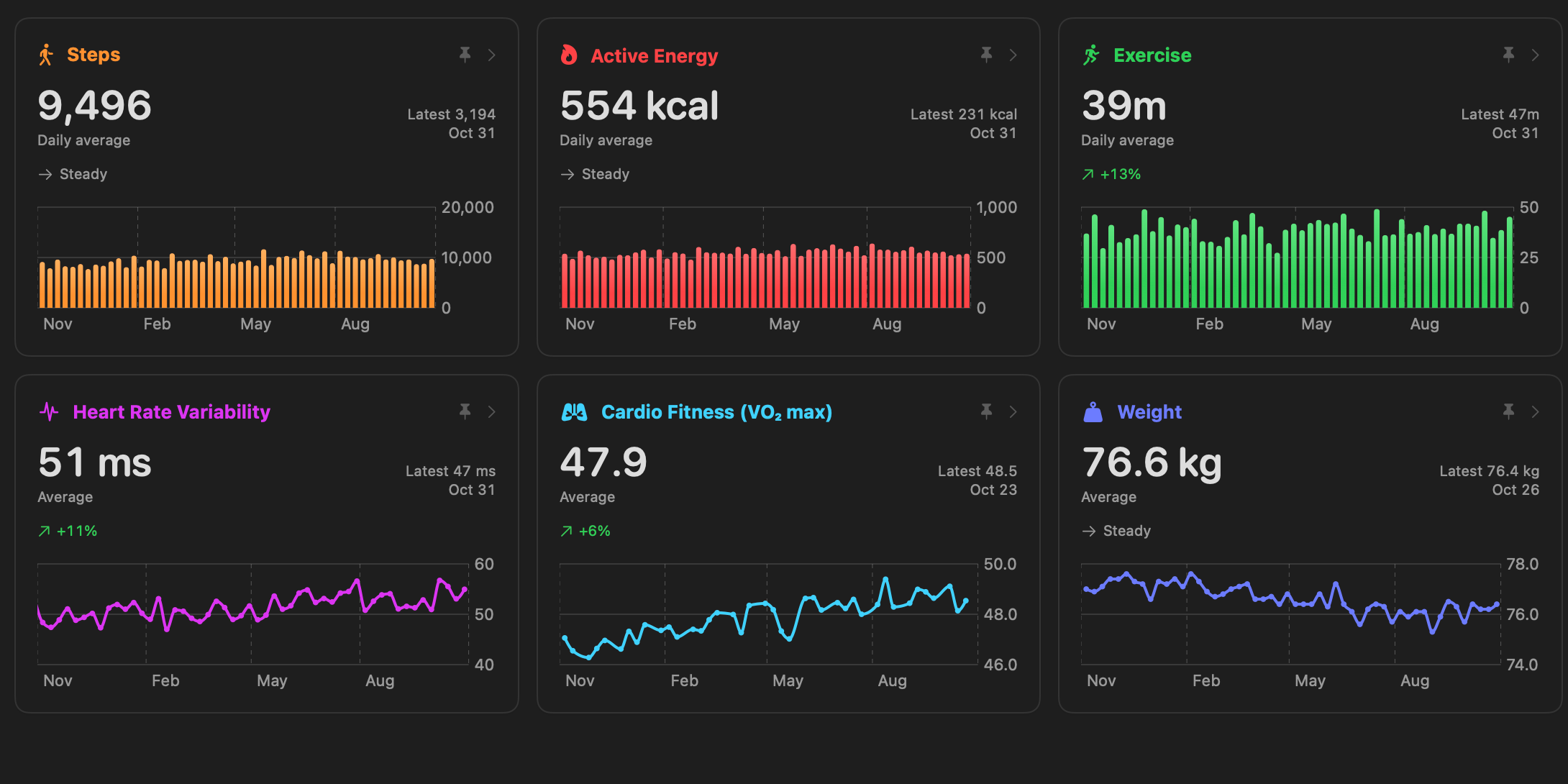
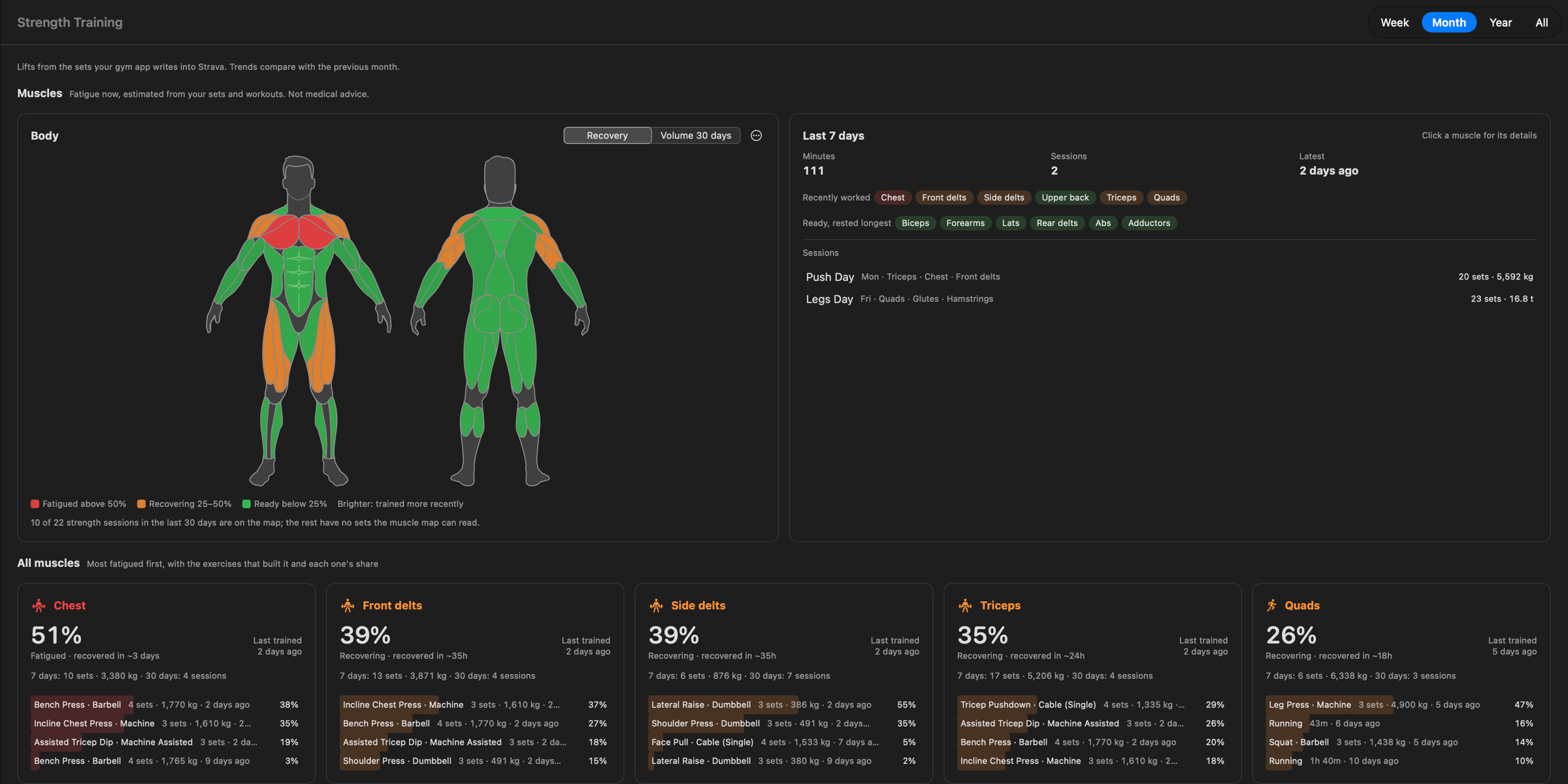
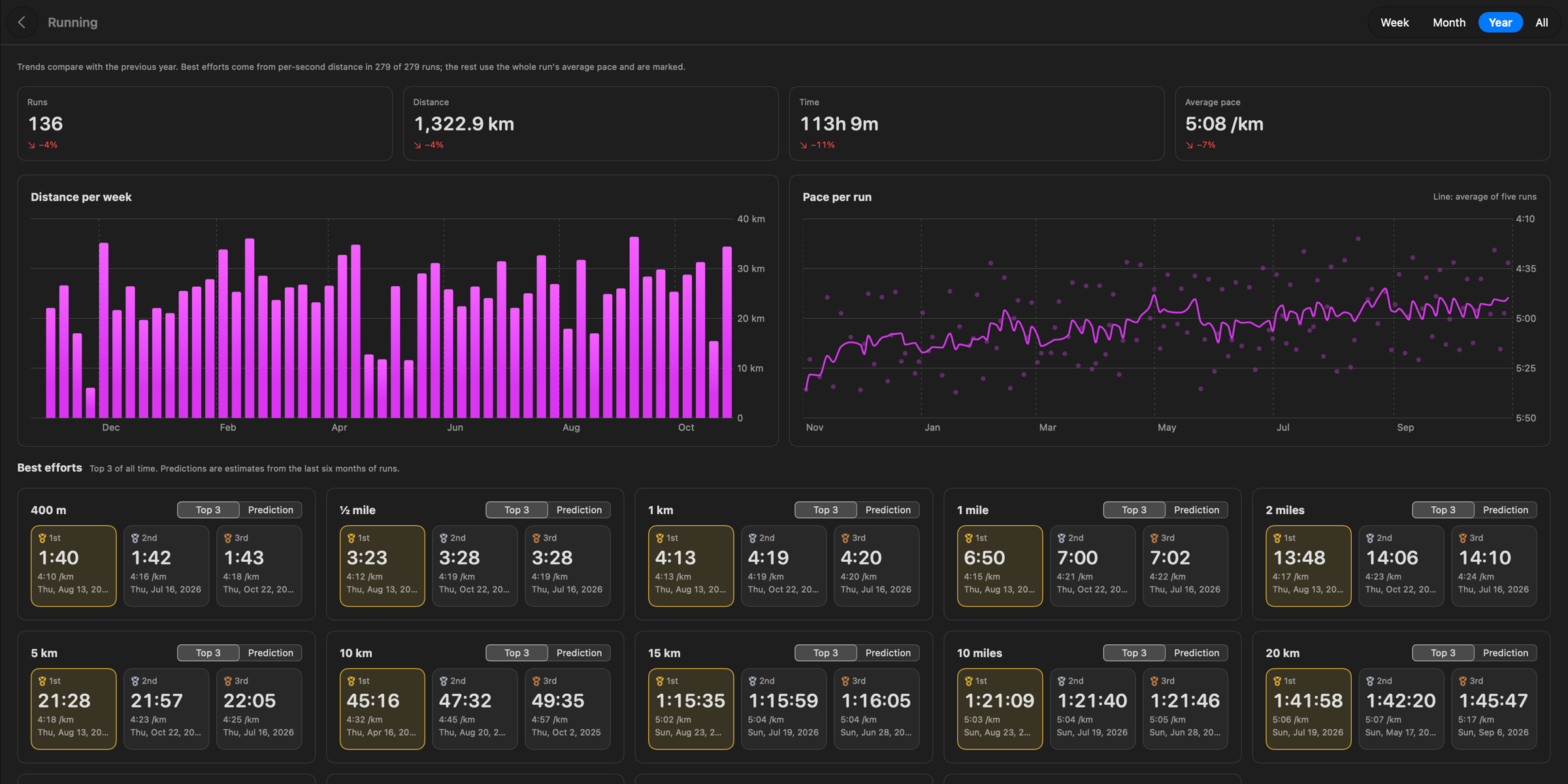
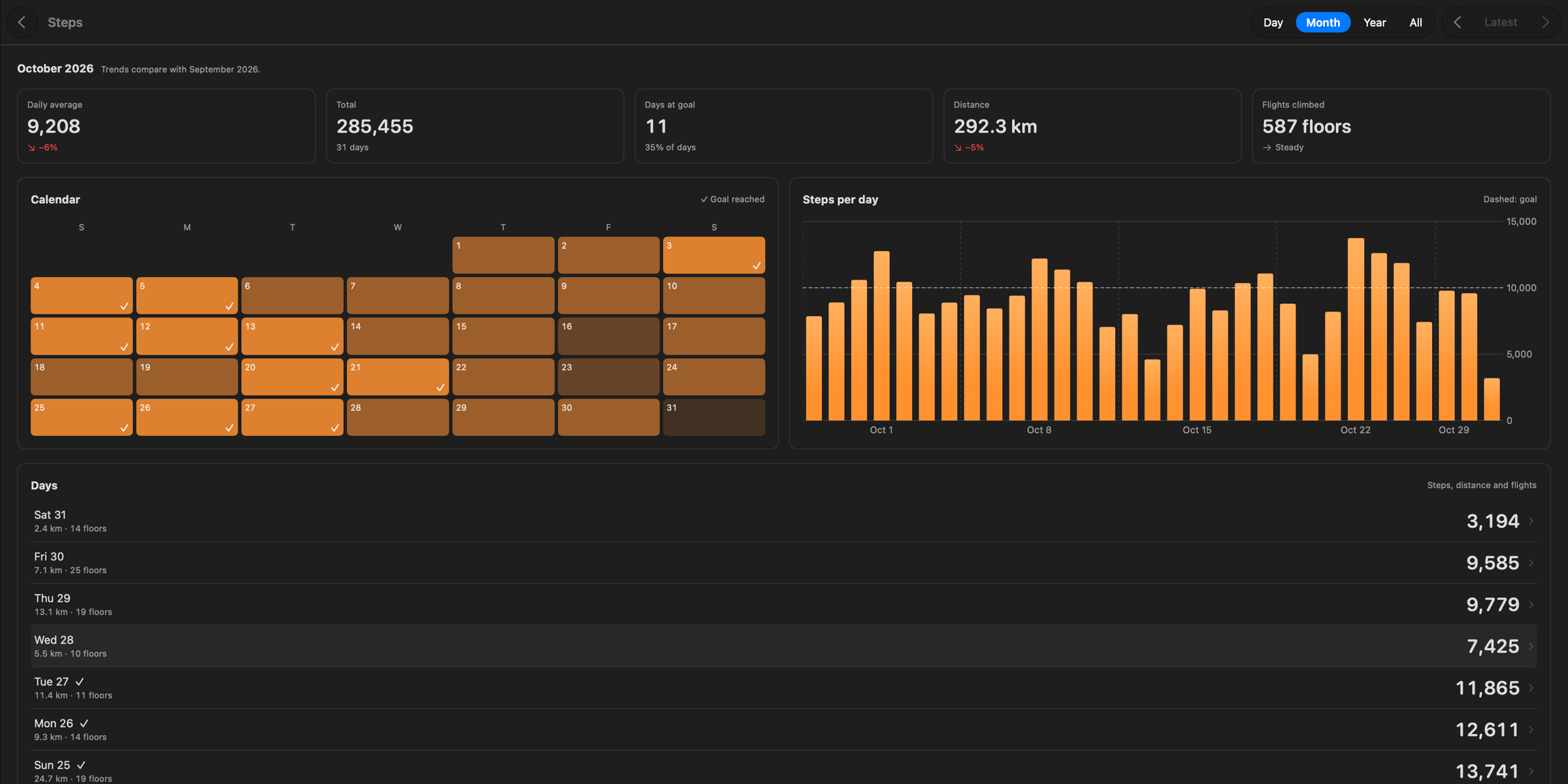
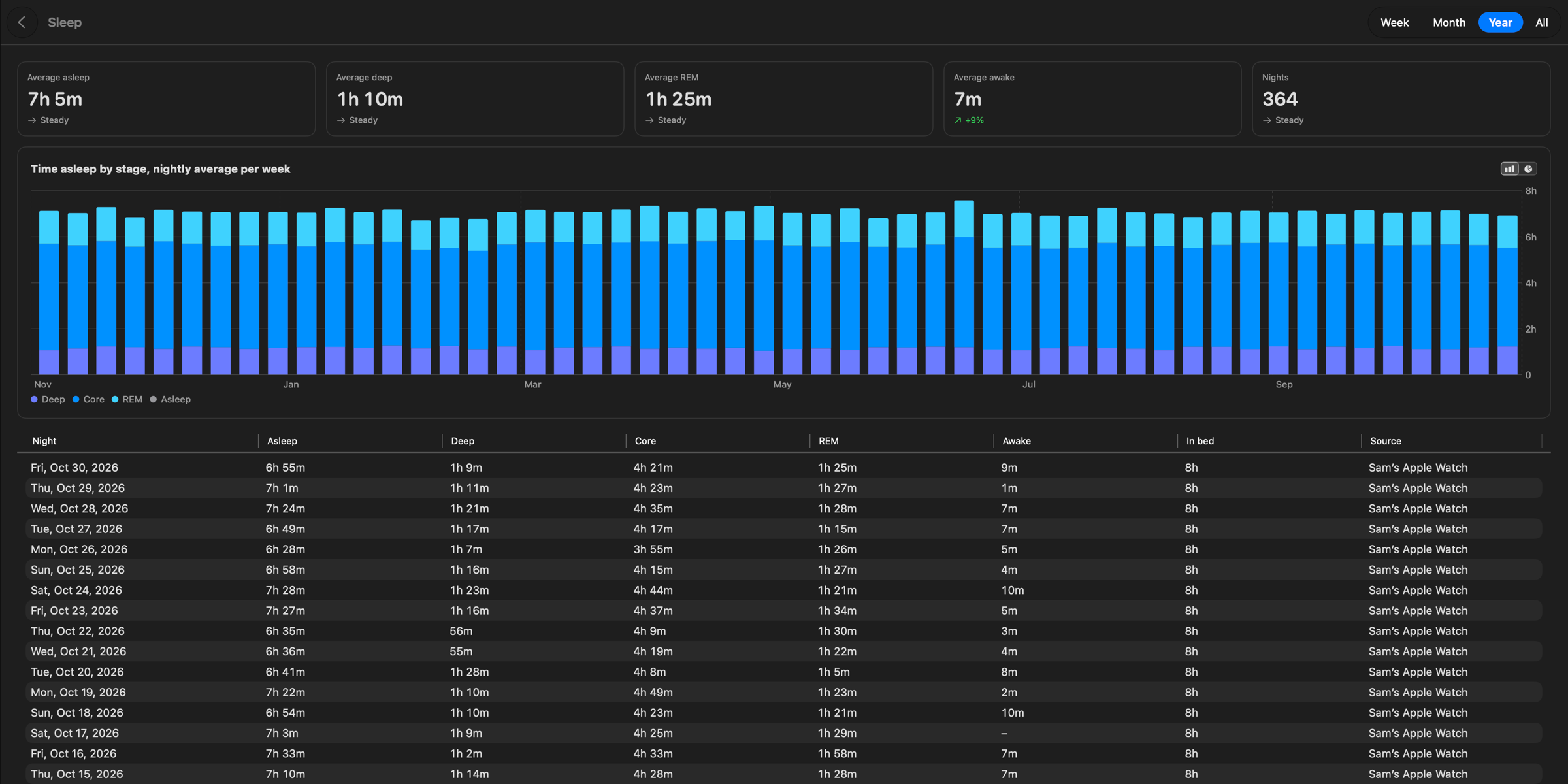
Screenshots of the Mac app with made-up data. Coming next: cycling, food tracking and more connections, as free updates.
How it works
Two ways in, one database. Use either, or both.
- 1
Import your history
In Health on the iPhone, choose Export All Health Data and AirDrop the export.zip to your Mac. Drop it on Pulsebridge. A million records import in about 30 seconds on Apple silicon.
- 2
Pair the iPhone app
Turn on Live Bridge on the Mac and scan its pairing code with the iPhone's Camera. The app finds your Mac on the network, over Wi-Fi or Tailscale.
- 3
New data follows
When Health has something new, iOS wakes the iPhone app in the background and it sends only what changed, including deletions. Nothing is read while the iPhone is locked; it catches up after you unlock it.
Your history lives in ~/Library/Application Support/Pulsebridge/health.sqlite. It's plain SQLite, so any SQLite tool can query it, and so can the pulsebridge command-line tool.
Bring your own AI
Pulsebridge has no AI model built in. It ships a read-only MCP server, so Claude, Cursor or any other MCP client can answer questions from your own data.
It has 19 tools covering metrics and daily values, period comparisons, sleep, Activity rings, workouts, steps, running best efforts, strength training and muscle fatigue. It reads the Mac's database, so it works while your iPhone is asleep.
The server can't change your data and never contacts the internet itself. Whatever the assistant reads is sent to that assistant's model provider.
The app's AI Assistants screen copies the setup for your client. For Claude Code:
$ claude mcp add pulsebridge -- /Applications/Pulsebridge.app/Contents/MacOS/pulsebridge-mcp Then ask it, for example:
- How did my resting heart rate change after I started running in March?
- Which muscles haven't I trained in two weeks?
- Compare my sleep this month with the same month last year.
Exports that run by themselves
Included in the one-time price. Set them up under Exports in the app, or run them from the command line with cron or launchd.
- JSON and CSV
- Into any folder: one JSON document, or one CSV file per section.
- REST
- JSON POST requests with a bearer token or your own headers, sent in batches and retried after network errors.
- MQTT
- One message per record to any broker, with TLS and QoS 0 or 1.
- Home Assistant
- Sensors for steps today, active energy, exercise, distance, resting heart rate, HRV, weight, last night's sleep and the latest sync. They appear automatically through MQTT Discovery.
Choose the data types, daily values or raw samples, and a date range. Exports run when new data arrives, every few hours, or daily at a set time. Each destination remembers where it left off and sends only what's new. Passwords and tokens stay in the macOS Keychain.
Your data stays on your devices
No account, no servers of ours, no analytics and no ads. We never see your health data.
- The iPhone app reads Health and never writes to it. It sends only to the Mac you paired.
- The Mac app sends data only where you tell it to: your Strava account, your exports, your AI assistant.
- Its automatic update check shows our web host your IP address and app version, and no health data.
- It's open source, so you can check all of this in the code.
- Read the privacy policy
$15, once
For the Mac app, with every update free for life. The iPhone app is free.
$15 one time, plus tax where applicable. Checkout by Polar, with Apple Pay. Or build it yourself from the source for free.
Included
- Dashboard, Steps, Running, Strength Training and Workouts
- MCP server for your own AI
- Automatic exports to JSON, CSV, REST, MQTT and Home Assistant
- The
pulsebridgeCLI - Updates through Sparkle, for life
Coming
- Cycling
- Food tracking
- More connections
Questions
Does the iPhone app need to stay open?
No. When Health has new data, iOS wakes the iPhone app in the background (about once an hour at most for each kind of data) and it sends only what changed. iOS decides exactly when. Exports and AI access run on the Mac with the data already there, so they never wait for the phone.
Does it sync while my iPhone is locked?
No. iOS doesn't let any app read Health data while the iPhone is locked, so syncing resumes after you unlock it. That applies to every Health app, this one included.
Can I use it without the iPhone app?
Yes. In Health on the iPhone, tap your profile picture and choose Export All Health Data, then AirDrop the export.zip to your Mac and drop it on Pulsebridge. Repeat it whenever you like: records already in the database are skipped.
Is the connection between iPhone and Mac encrypted?
Not yet. The bridge uses plain HTTP with a token. The token keeps other devices from writing to your database, but the traffic isn't encrypted, so someone on the same network could read it, token included. Use it on your home network or over Tailscale. HTTPS is on the roadmap.
What does the AI assistant see?
Pulsebridge has no AI model of its own. Its MCP server lets an assistant you choose read your database; it can't change or delete anything. Whatever the assistant reads goes to that assistant's model provider, under their privacy terms.
Do I need Strava?
Only for the Strength Training page, which reads your sets from Strava activities. Everything else, Running included, comes from Apple Health. The connection uses a Strava API application you create yourself, so Pulsebridge has no server in the middle.
Why pay if it's open source?
You don't have to. The code is MIT-licensed and builds with Xcode. Buying gets you the signed, notarized app with automatic updates and pays for the work.
Is there a subscription?
No. $15 once, and updates stay free for life. The iPhone app is free.